

What to Pack for Your First African Safari: The Ultimate Checklist
Preparing for your very first African safari is an exhilarating milestone. However, packing for the bush is entirely different from packing for a standard beach holiday or city break. With strict luggage weight limits on bush-flight transfers, variable savannah temperatures, and specific dress codes, knowing what to bring—and what to leave behind—is the key to a stress-free adventure.
Whether you are tracking lions across the open plains of the Maasai Mara or enjoying a golden-hour sundowner, this comprehensive safari packing checklist covers everything you need to stay comfortable, protected, and fully prepared.
Table of Contents
1. Safari Clothing & Colors: What to Wear
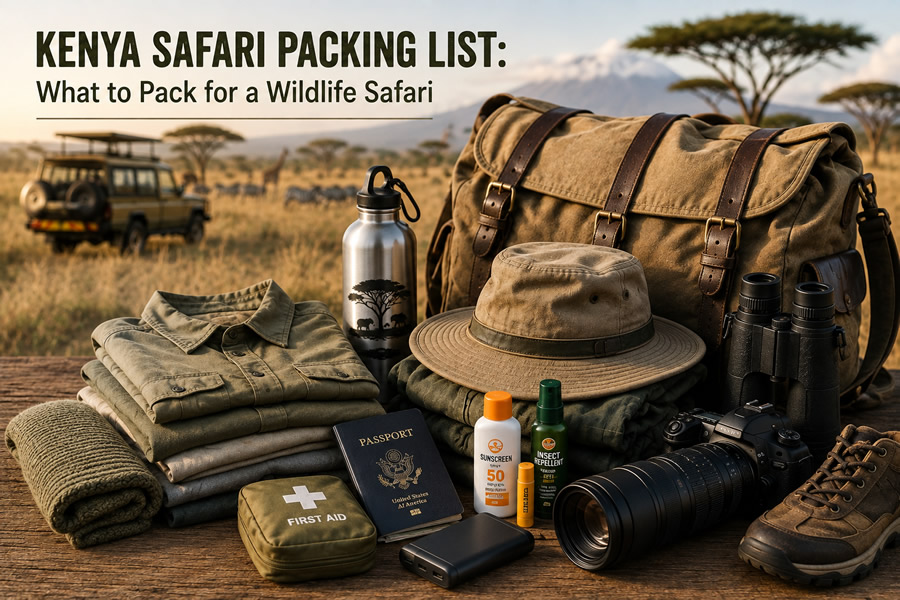
When it comes to safari fashion, functionality always trumps style. The goal is to blend into your natural environment while staying cool under the equatorial sun and warm during early morning game drives.
- Stick to Earthy Tones: Choose neutral colors like khaki, beige, olive green, and tan. Avoid bright neon colors (which startle wildlife) and dark blues or blacks (which absorb intense heat and actively attract tsetse flies).
- Master the Art of Layering: Mornings in the high-altitude savannah are notoriously brisk, but temperatures climb rapidly by midday. Pack lightweight fleeces, cardigans, or windbreakers that you can easily peel off as the sun warms up.
- Breathable Fabrics: Opt for lightweight, moisture-wicking linen or cotton garments. Long-sleeved shirts and trousers also protect your skin from thorny brush and pesky mosquitoes at dusk.
2. Footwear & Practical Gear
Most of your game viewing happens inside a comfortable 4×4 vehicle, but you will still want proper footwear for walking safaris, camp grounds, or lodge transfers.
- Sturdy Closed-Toe Shoes: Lightweight hiking boots or broken-in trainers with good grip are essential for nature walks or uneven terrain.
- Comfortable Camp Sandals: Bring a pair of slip-on sandals or flip-flops to relax in around your tent or lodge pool in the evening.
- Soft-Sided Luggage: Keep in mind that internal safari bush flights enforce strict weight limits (usually 15kg/33lbs) and require soft duffel bags rather than rigid hard-shell suitcases for easy trunk stacking.
3. Electronics & Photography Equipment
You will encounter unforgettable wildlife moments that you’ll want to capture forever. Don’t let a dead battery or lack of zoom ruin your shot!
- High-Zoom Camera & Extra Lenses: A DSLR or mirrorless camera with a telephoto zoom lens (at least 300mm) is ideal for capturing distant leopards and birdlife.
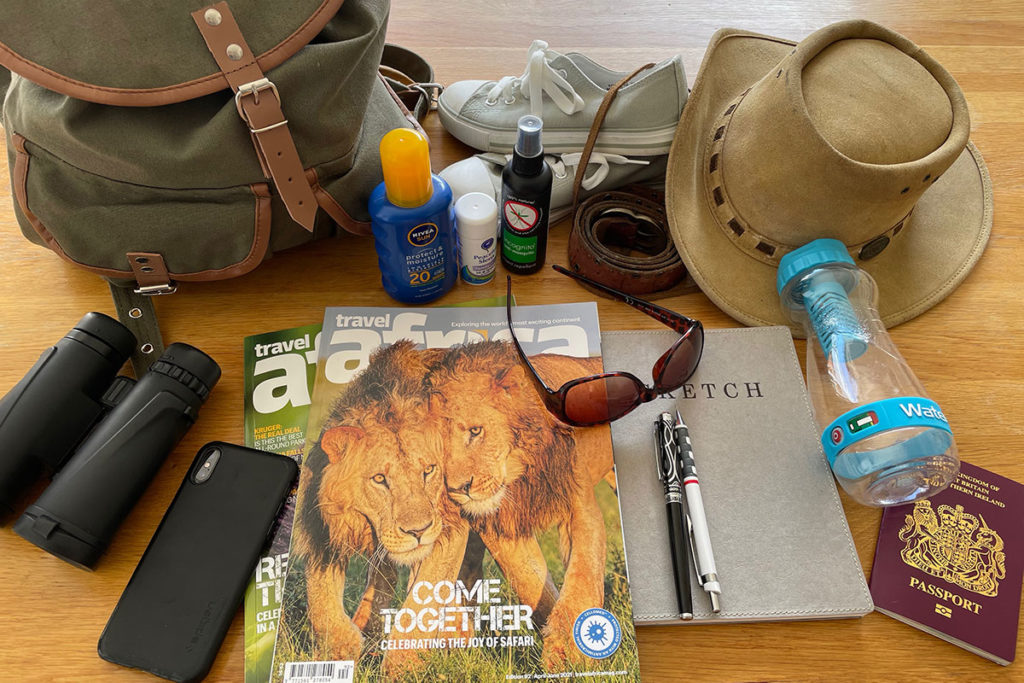
- Binoculars (8×42 or 10×42): Essential for spotting wildlife tucked away in distant acacia trees. A single pair per person is strongly recommended.
- Power Banks & Universal Adapters: Safari lodges often rely on solar power or generator cut-offs. Bring a high-capacity power bank and spare camera batteries to keep your gear charged.
4. Health, Toiletries & Sun Protection
Protecting yourself from the elements ensures your focus stays on the wildlife rather than discomfort.
- Sun Protection Essentials: Pack high-SPF sunscreen, a wide-brimmed safari hat with a chin strap (to keep it from blowing off in open vehicles), and polarized sunglasses.
- Insect Repellent: Bring an effective DEET-based mosquito repellent for evening game drives.
- Personal Medical Kit: Pack motion sickness pills (for bumpy dirt roads), rehydration salts, anti-histamines, and any personal prescription medications.
Got your bags packed? Let’s plan your safari!
Leave the logistics, professional 4×4 transport, and luxury lodge bookings to our expert safari team. Get a customized quote today.
Plan Your Custom Safari Now →